Sense, reason, act: the loop that runs a building
A building runs on a loop that never stops: notice what is happening, work out what it means, and do something about it, before the room gets uncomfortable or the bill gets high. That loop is the whole job, and it is what Fibric is built to close.
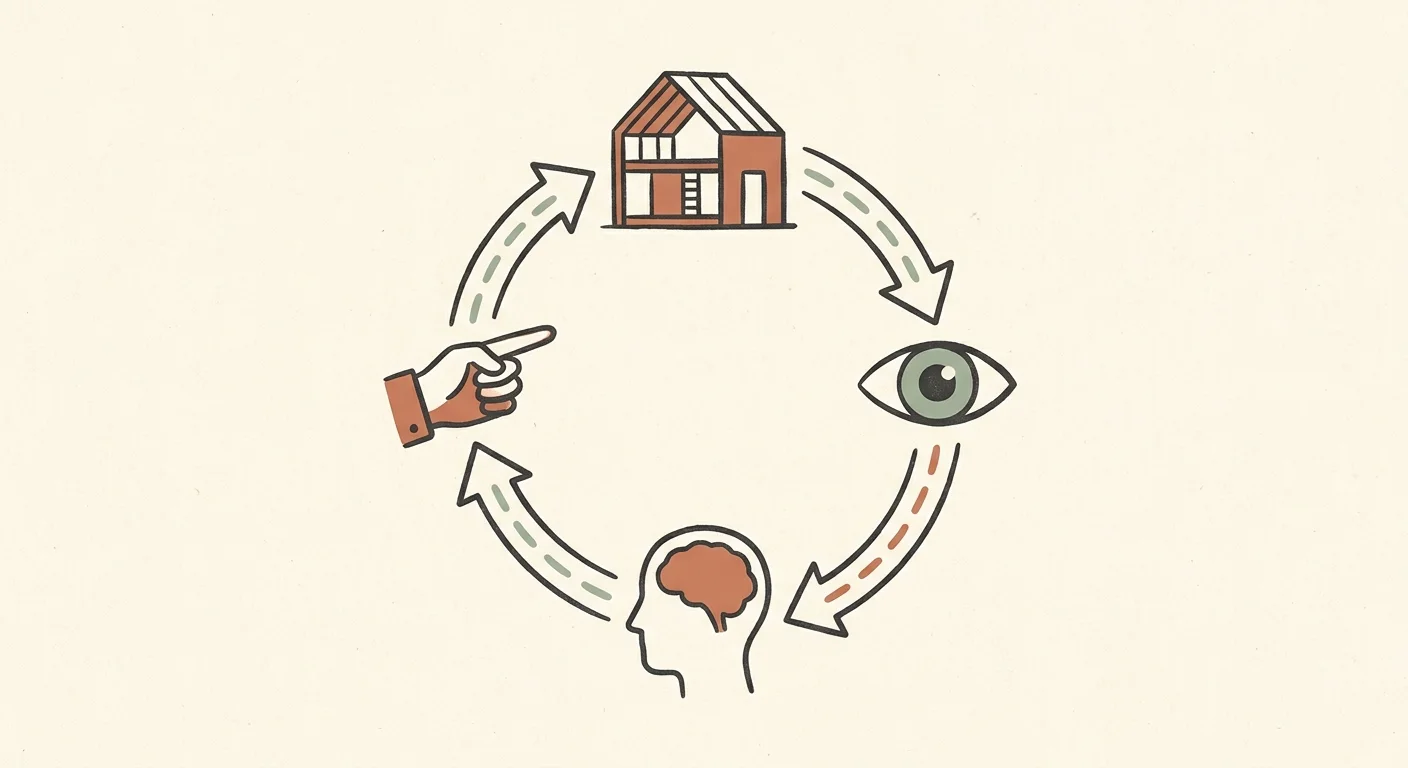
Watch a good facilities lead for a day and you are watching a control loop wearing a hard hat. They walk the floor and take in a hundred small signals: the east wing feels warm, the third-floor conference room is booked solid this afternoon, the chiller has been cycling more than it should. They turn those signals into a judgment about what is coming. Then they do something, nudge a setpoint, pre-cool a zone, file a work order, before the discomfort or the cost actually arrives. Sense, reason, act. Then around again.
Most building software automates none of that. It senses beautifully and stops. You get dashboards, alerts, trend lines, a wall of green and red. What you do not get is the part that matters: the reasoning that turns a hundred readings into one decision, and the action that closes the loop. The human is still the only thing connecting the sensor to the setpoint, and the human goes home at six.
The three beats, precisely
Fibric is organized around closing that loop, so it is worth being exact about each beat rather than waving at it.
Pull the real state out of every system at once: occupancy, arrivals, zone temperatures, access events, energy draw, the schedule. One honest picture, assembled from sources that were never built to agree.
Work out what the picture means and what is coming. The 2pm meeting will fill a cold room. The empty wing can coast. Resolve the conflict between comfort due soon and energy spent now.
Do the thing, through the equipment already installed. Pre-cool the room before the meeting, hold heat off the empty wing, and leave a receipt for every change.
and then around again. Each action changes what you sense next.
Sense is harder than it sounds
The reason most software stops at sensing is that even sensing well is hard. A building's truth is scattered across an HVAC controller, an access system, a property management database, and a handful of point sensors, none of which share a vocabulary. Fibric's job in the first beat is to turn that scatter into one coherent, current state, and to do it with discipline: only real signals, never a placeholder standing in for a missing reading. A loop that reasons over fiction will act on fiction, so the integrity of the loop starts here.
Reason is where judgment lives
The middle beat is the one people mean when they say "AI." A base model is genuinely good at it: weighing an afternoon of bookings against a chiller's behavior and predicting where comfort is about to break. But reasoning is also where a model is most dangerous, because a confident wrong answer reads exactly like a right one. So in Fibric the reasoning beat ends in a proposal: a validated plan for what the next beat could do, never a direct action.
Act is governed, or it is reckless
The third beat touches the world. In the reference pattern, deterministic code checks a proposed plan against configured policy, applies duplicate controls inside the governed runtime, and writes an execution record. A real setpoint change also requires verified connector semantics, read-back or ambiguity handling, and independent building safeguards.
Why the loop has to close itself
The eventual value may come from closing bounded loops without requiring a person for every low-risk step. Managed pilots should begin with review appropriate to consequence and expand authority only on evidence; no physical action should be described as happening “every time.”
And closing it means the loop feeds itself. The action you take changes the state you sense next, which changes the next judgment, which changes the next action. Pre-cooling room 312 shifts the energy picture, which informs whether the empty wing can keep coasting. A real operation runs as a continuous loop, not a string of one-off decisions, and the point of Fibric is to run that loop safely.
A building is just the clearest example
Nothing in those three beats is specific to HVAC. A paper company senses open orders and ship promises, reasons about which will slip, and acts by placing a hold and warning the customer. A warehouse senses flow, reasons about a stalled station, and acts by rerouting. Same loop, different inputs. The building is simply where the loop is easiest to see, because you can feel the result the moment you walk into a room that was ready for you.
Sense, reason, act. Close the loop, govern the action, and let it run. That is what it takes to run a building without standing in the middle of it, and it is the same machine underneath everything else you operate.
Keep reading: Why AI has to leave the screen · One operational layer