Why operators have names
Every operator on Fibric has a name. Not a service identifier, not a UUID with a nickname — a name, the kind you would put on a door. This is not branding. It is the oldest accountability technology humans have, applied to delegated work.
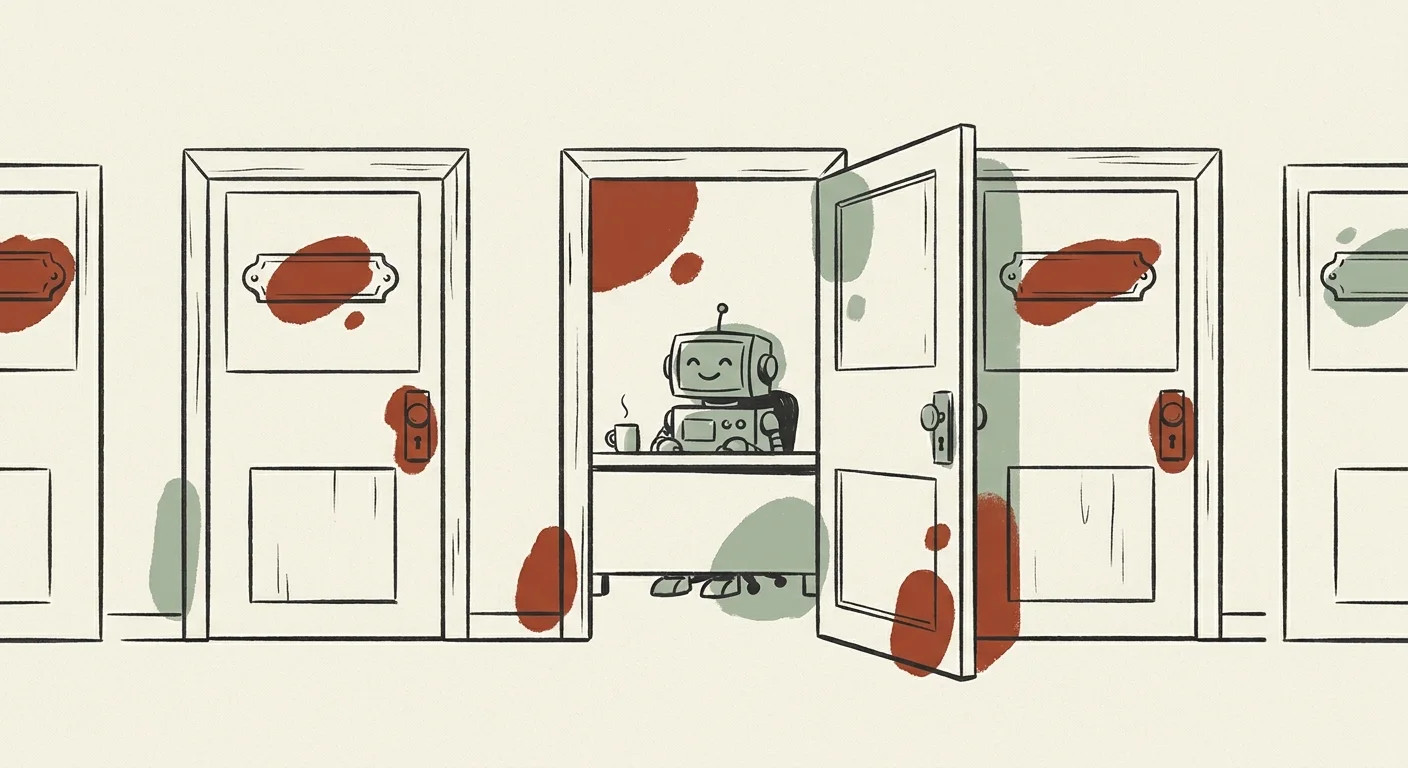
When something goes wrong in an organization, the first question is never "which process failed?" It is "who was handling this?" The question works because responsibility in human organizations attaches to names. A name is an address for accountability: it tells you where to send the question, the praise, and the blame. Strip the names out and responsibility diffuses into the fog of "the system," where nobody can be asked anything.
Most automation lives in that fog on purpose. A cron job has no name because nothing is expected of it beyond firing on schedule. A microservice has an identifier because it is plumbing, and you do not hold plumbing accountable; you replace it. That anonymity is honest for software that merely executes. It becomes dishonest the moment the software starts making judgment calls about your orders, your building, or your money.
Delegation is a social contract
An operator on Fibric does delegated work. It watches a live system, forms a view of what is happening, and proposes actions that a deterministic executor then carries out under policy. That is not plumbing. That is the shape of a job — and jobs come with a social contract that anonymous software cannot sign. When you delegate to a colleague, three things are true: you know who has the work, you know what they are allowed to do, and you can ask them afterward why they did what they did. We built named operators so that all three stay true when the colleague is an AI.
BearScope is the concrete live case, reading supported CX and commerce data through its application BFF. Where a governed action path is enabled, its record should name the operator identity, scope, tenant, intent, attempts, and observed outcome. Naming improves accountability; it does not turn software into a colleague or prove the outcome.
A name is a boundary you can see
The second thing a name does is bound expectation. When you hear a colleague's name, you immediately know roughly what they do and, just as important, what they do not. Names carry scope. A Fibric operator's name works the same way, because behind every name sits an explicit, inspectable definition:
Scope, capabilities, record
A named operator should declare which systems it may sense, which capabilities it may propose, and which policies gate covered actions. The name is the handle; credentials and enforcement define the real boundary.
This is why we resist the framing of one great, general agent that does everything. A do-everything agent has a do-everything scope, and a do-everything scope is no scope at all. You cannot reason about its blast radius, and you cannot answer the question "what is it allowed to do?" with anything shorter than "everything it can." Named operators cut the other way: narrow, legible, and accountable. The energy operator watching a hotel's room-by-room digital twin in the Smart City Labs pilot does not touch orders. The billing logic inside Invoice for Me does not touch thermostats. The name tells you which, before you read a line of configuration.
Names change how people behave, too
There is a quieter effect we did not fully anticipate. When an operator has a name, the humans around it treat it like a member of the operation rather than a feature of the software. They talk about what it caught overnight. They question its judgment in specific terms — "why did it escalate that one?" — and the receipt answers in specific terms. They develop calibrated trust: not blanket faith in "the AI," but a working sense of where this particular operator is sharp and where it needs a tighter policy. That calibration is exactly the relationship you want between people and delegated autonomy, and it does not form around an anonymous process. You cannot build a working relationship with svc-worker-7.
None of this replaces technical controls. Fail-closed policy, single-flight, and idempotency can bound covered paths but are not universal guarantees. Names help people ask who was in scope and why a proposal was made; the execution evidence must carry the answer.
Keep reading: From cron to operators · Governed by default