For seventy years, computing has gotten extraordinarily good at one thing: reasoning inside a screen. The most capable models in history can write, plan, and decide. And yet the work that actually matters, the building that needs to be warm by 4:10, the order that is about to miss its ship date, the line that is one exception away from freezing, still runs on a person noticing, in time, in a system nobody was watching closely enough.
That gap is not a model problem. The intelligence is here. The gap is that intelligence has no governed way to act on the real world. It can suggest. It cannot be trusted to do. So it stays behind the glass, and the physical world keeps running on attention that does not scale.
Reasoning that cannot act is a very expensive opinion.
What Fibric is
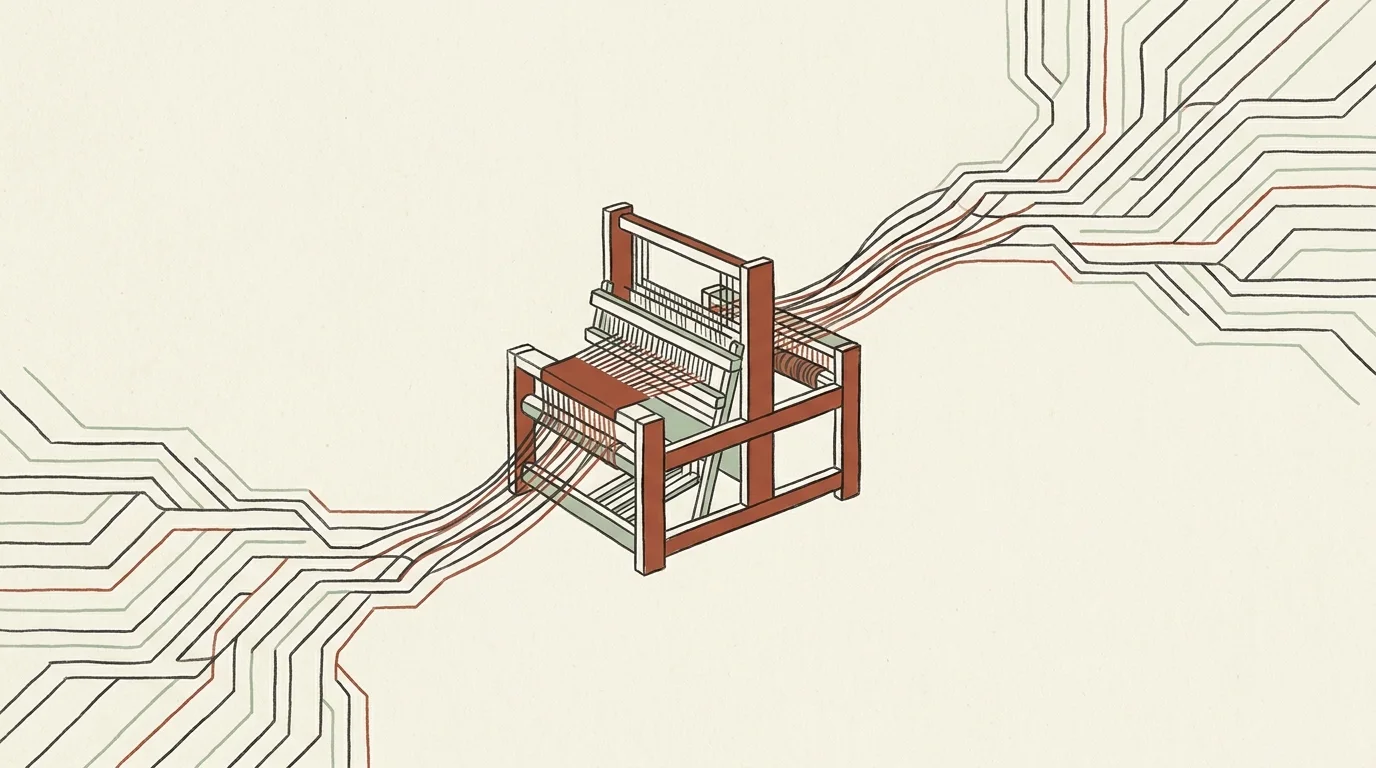
The generalized Fibric architecture defines an operational layer beneath products. A named operator can sense supported software or hardware through validated connectors and a canonical event shape; reason over governed context by proposing a structured plan; and dispatch enabled steps only after the configured policy and approval path clears them. Single-flight and idempotency controls are intended to reduce duplicate effects, and supported execution paths preserve an attributable action record. These are reference control objectives until they are validated for a managed deployment; BearScope implements its current governed controls directly in the live application path.
The reference model is intended to reuse a control contract across industries. A new vertical still requires connector capability parity, data-quality checks, policy, human-approval boundaries, downstream recovery planning, and acceptance testing; it is more than changing a connector name.
Why governance is the product
Letting an agent near operational systems requires controls that can be inspected. In live BearScope, tenant context and row-level security protect tenant-owned data. In the reference architecture, single-flight and idempotency keys reduce duplicate-action risk, while policy defaults to no under uncertainty. These controls narrow risk; they do not remove downstream-system limits or human responsibility.
The model proposes. A deterministic check approves it or blocks it.
That is the difference between a demo and a deployment you consider for a real building, order, or customer. It comes from layered controls that are verified for the specific path, not from a universal safety claim or a smarter model alone.
What we are building toward
The direction is a platform where an approved system can participate in a governed loop: sense, propose, review, dispatch, and record. BearScope is the live production proof on real CX and commerce data. Other operators and product stories are explicitly labelled managed early access, pilot, or reference pattern.
Software learned to think. We are teaching it to matter.