Voice is just another sensed channel
Phone calls feel like they should be special. They are audio, they are real-time, they carry a human voice. On the supported BearScope path, selected Amazon Connect call context is normalized into attributable records alongside other governed CX data. That common treatment makes the covered path reviewable.
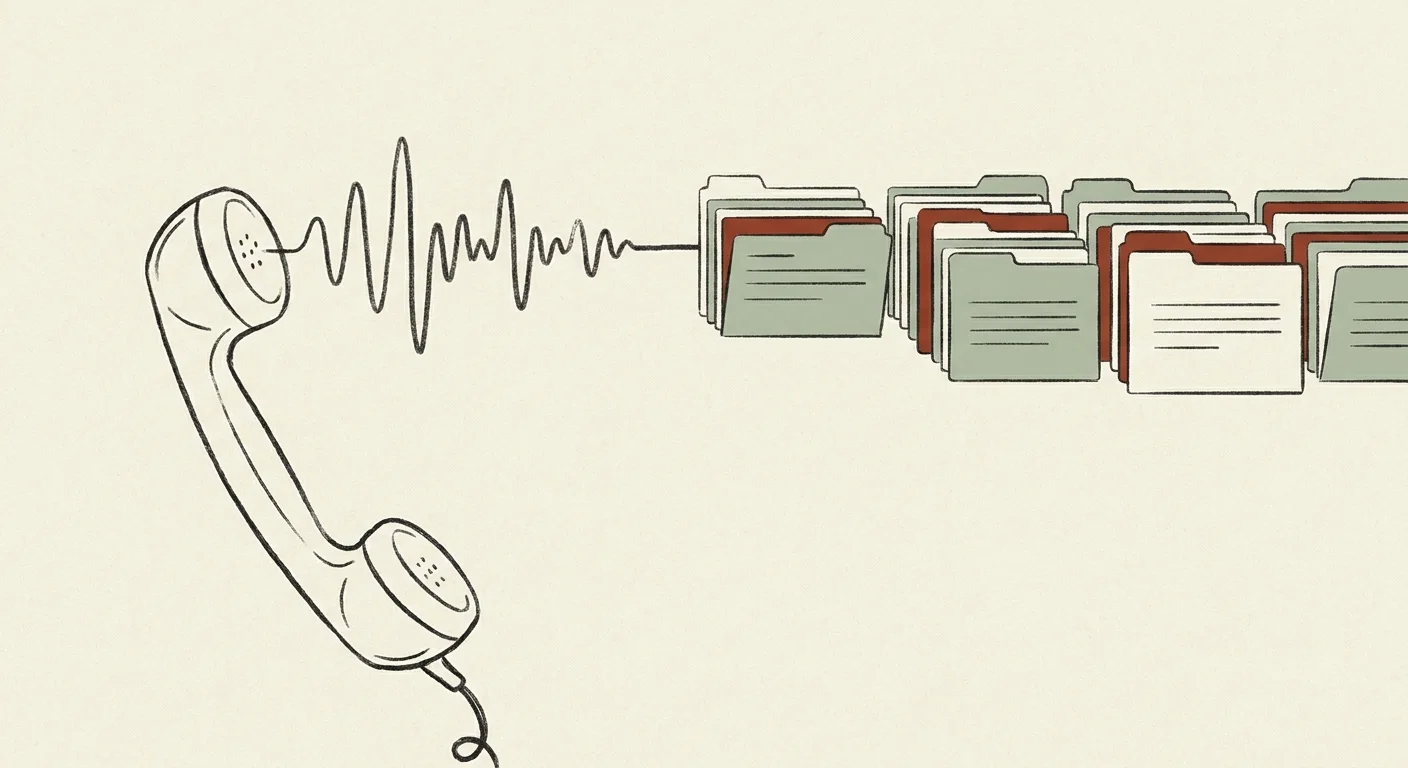
Most systems that handle calls grow a second architecture for them. There is the tidy pipeline for structured data, and then there is the voice stack off to the side: its own storage, its own identifiers, its own notion of time, glued to the rest by a shared customer ID and optimism. The result is two sources of truth that drift, and a support call that can never be lined up precisely against the actions taken because of it.
The reference architecture avoids a separate voice data model. In the current BearScope implementation, supported call context from Amazon Connect is normalized with tenant and source context; this does not imply that every call, recording, or downstream system is covered.
What a call becomes
When a call lands in Amazon Connect, the connector's job is translation, not ceremony. The telephony facts become events. The recording becomes a governed artifact the events reference. The transcript, when produced, becomes events segment by segment, each anchored to an offset in the audio. Nothing about this flow knows it is "voice infrastructure." It is the same sense pipeline, fed by a different physics.
A governed event: tenant, timestamps, queue, participants. The call now exists in the same record as everything else.
The recording lands as an artifact; events carry the reference, never the payload.
Transcript segments arrive as events, each pinned to its offset in the audio.
Anything an operator does because of the call is an effect with a receipt, linked to the events that prompted it.
On supported BearScope paths, call records, audio references, and transcript segments carry tenant scope and provenance fields. Isolation still depends on verified storage policies, signed media access, BFF checks, and operational permissions; the event shape does not make leakage impossible by itself.
One spine, two views
The payoff shows up in BearScope’s call-review product: the player and conversation context can be linked through shared identifiers and timestamps. They can still diverge when ingestion is delayed, transcription is partial, or a source is unavailable, so the UI must preserve those states.
Shared identifiers and offsets reduce forensic work. Alignment quality still depends on source timestamps, ingestion coverage, transcription accuracy, and whether the supported action path records its evidence links.
Receipts close the loop
Sensing is only half the contract. If a call leads an operator to propose an action, updating a conversation, flagging an order, escalating to a human, that action goes out through the executor like any other: validated against policy, single-flight, idempotent, receipted. The receipt cites the events that motivated it. So the full arc of a call, audio in, transcript, receipts out, lives in one governed record, from the first ring to the last effect.
Why the boring answer wins
A common event contract gives voice the same review checklist as other supported channels, but it does not confer provenance, isolation, replayability, or action governance for free. Each pipeline has to implement and verify those controls.
Keep reading: One envelope for everything · What running on live commerce taught us